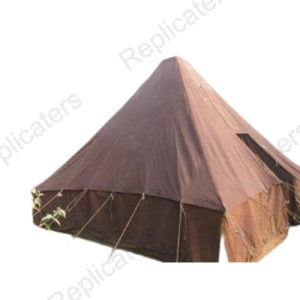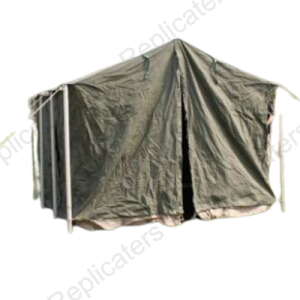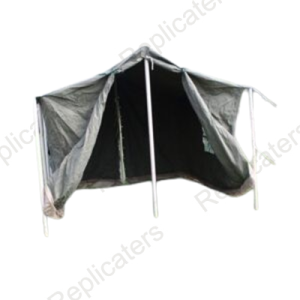

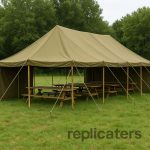


The U.S. Army mess tent shelter manufactured by us was the backbone of field dining operations during WW2. It is designed to provide cover for meal preparation and troop feeding, it is issued at company and battalion level. The tent’s rectangular base and peaked roof created a spacious, practical design that could accommodate field kitchens, supply tables, and benches.
The tent is constructed of olive drab cotton duck canvas, the mess tent was supported by a system of upright poles, ridgepoles, guy ropes, and stakes, making it stable in all weather conditions. Large openings at either end allowed for cross ventilation and easy access, while roll-up sidewalls could be opened in hot climates or closed for rain and wind.
These tents became iconic features of WW2 encampments — not only as dining halls but often doubling as field meeting spaces, recreation halls, and chapels.
Technical Specifications
-
Type: Rectangular peaked-roof mess tent
-
Dimensions: approx. 16 ft (width) × 32 ft (length) × 12 ft (height at ridge)
-
Capacity: 80–100 men seated in shifts (or kitchen + storage + staff)
-
Fabric: Heavy cotton duck canvas, 12.29 oz per sq. yard, treated for water resistance, 100% natural, no synthetic content.
-
Color: Olive drab #3 (early) or/darker OD #7 (later war) – both choices available in the production selection section.
-
Poles: Multiple upright hardwood poles with sectional ridgepoles (center height 12 ft)
-
Pegs: 30 hardwood stakes
-
Guy Ropes: cotton with wooden tensioners
-
Entrances: Open gable ends with roll-up canvas doors
-
Sidewalls: Roll-up design for ventilation, secured with ropes and toggles
-
Groundsheet: Not integrated (troops often used planks, tarps, or straw inside)
Approximate Weight
-
Canvas body: ~300–350 lbs (160 kg)
-
Poles + ridgepoles: ~150 lbs (68 kg)
-
Pegs + ropes: ~20 lbs (9 kg)
👉 Total system weight: approx. 470–520 lbs (236 kg)
This meant transport was always by truck or trailer — never man-packed.
Door delivered to you by FedEx, in knocked down condition.